Freelancers in Sri Lanka: A Simple Guide to Business Income Tax
Are you a freelancer in Sri Lanka? Whether you’re a graphic designer, software developer, online tutor, content creator, digital marketer, accountant, consultant, or any other self-employed professional, it’s important to understand your income tax obligations.
Many freelancers believe that because they don’t have a traditional employer, they don’t need to pay income tax. In reality, income earned from freelancing is generally treated as Business Income under the Inland Revenue Act of Sri Lanka.
This guide explains the basics in simple language.
Who Is Considered a Freelancer?
A freelancer is someone who works independently and provides services to clients rather than working as a permanent employee.
Common examples include:
- Software Developers
- Graphic Designers
- Web Designers
- Mobile App Developers
- Digital Marketing Specialists
- Content Writers
- Copywriters
- Accountants
- Tax Consultants
- Lawyers
- Architects
- Engineers
- Photographers
- Videographers
- Online Tutors
- Translators
- Social Media Managers
- Virtual Assistants
- Business Consultants
If you earn money by providing your skills or professional services independently, you are generally considered to be carrying on a business or profession.
What Is Business Income?
Business income is the profit you earn from operating a business, profession, trade, or vocation.
For freelancers, your taxable business income is generally calculated as:
Business Income = Total Income Earned − Allowable Business Expenses
This means you are usually taxed on your profit, not on the total amount you receive from clients.
A Simple Example
Imagine you earned LKR 5,000,000 from freelance work during the year.
You also incurred the following business expenses:
- Internet charges
- Laptop and computer equipment
- Software subscriptions
- Office rent
- Telephone bills
- Business travel
- Advertising
- Professional subscriptions
Your total allowable business expenses amount to LKR 1,200,000.
Your business profit would be:
LKR 5,000,000 − LKR 1,200,000 = LKR 3,800,000
Generally, income tax is calculated based on this profit after considering any applicable tax reliefs and the relevant provisions of the Inland Revenue Act.
What Business Expenses Can You Claim?
Generally, expenses incurred wholly and exclusively for earning your business income may be deductible.
Examples include:
- Internet expenses
- Mobile phone bills used for business
- Laptop and computer purchases
- Software subscriptions (Microsoft 365, Adobe, Canva, etc.)
- Website hosting and domain registration
- Office rent
- Office electricity
- Printing and stationery
- Marketing and advertising costs
- Business travel expenses
- Bank charges relating to business
- Accounting and tax consultancy fees
- Professional membership subscriptions
Not every expense is automatically deductible. Some expenses are restricted or may require specific tax treatment.
Why Keeping Records Is Important
Good record-keeping helps you prepare accurate tax returns and supports your claims if requested by the Inland Revenue Department (IRD).
Keep copies of:
- Client invoices
- Bank statements
- Payment confirmations
- Expense receipts
- Contracts or agreements
- Accounting records
Keeping your records organised throughout the year will save time and reduce stress when it’s time to file your tax return.
What If Your Clients Are Overseas?
Many Sri Lankan freelancers work with clients in countries such as Australia, the United Kingdom, the United States, Canada, and Singapore.
Receiving payments from overseas does not automatically mean your income is tax-free.
The tax treatment depends on several factors, including:
- The nature of the services provided
- Where those services are utilised
- The applicable provisions of the Inland Revenue Act
If you mainly serve foreign clients, obtaining professional tax advice is recommended.
Do Freelancers Need to Register with the Inland Revenue Department?
If you earn taxable income, you may need to:
- Obtain a Taxpayer Identification Number (TIN), where required.
- Register for the relevant tax types.
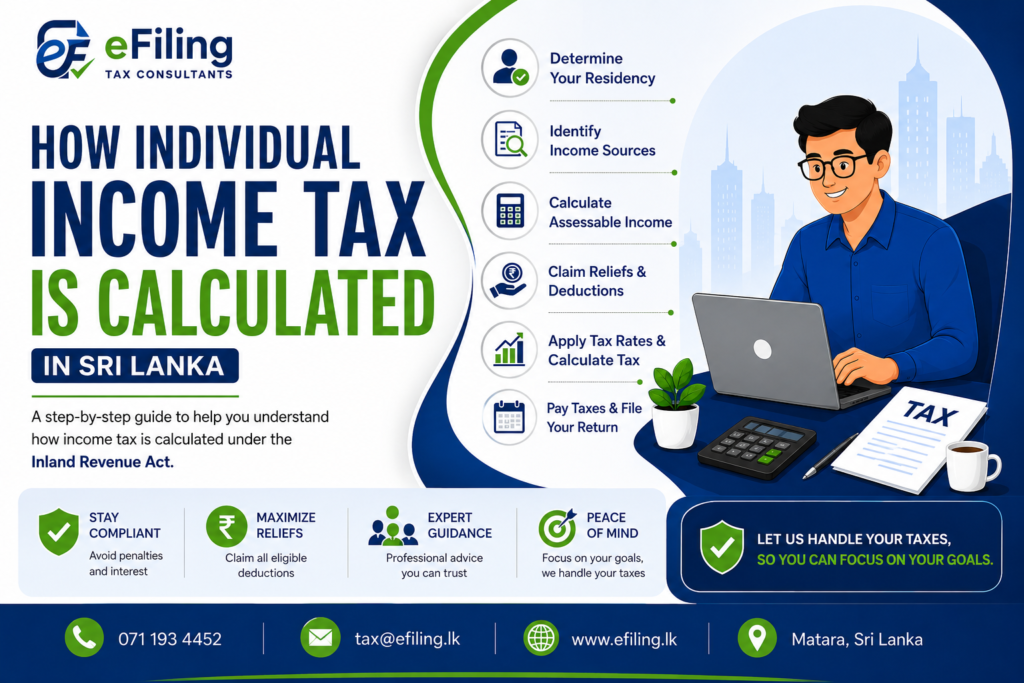
- File annual income tax returns.
- Pay any taxes due within the prescribed deadlines.
Meeting these obligations helps you avoid penalties and interest.
Can Freelancers Be Required to Register for VAT?
Yes.
If your business exceeds the applicable VAT registration threshold and your services fall within the scope of VAT, you may be required to register for Value Added Tax (VAT).
VAT obligations depend on the nature of your services and the applicable legal requirements.
Common Mistakes Freelancers Make
Many freelancers unintentionally create tax problems by:
- Assuming freelance income is not taxable.
- Not keeping proper records.
- Mixing personal and business expenses.
- Waiting until the end of the year to calculate profits.
- Ignoring Inland Revenue registration requirements.
- Believing that all foreign income is automatically exempt from tax.
Avoiding these mistakes can make tax compliance much easier.
Key Takeaways
- Freelance income is generally treated as Business Income in Sri Lanka.
- Income tax is generally calculated on your business profit, not your total income.
- Keep proper records of both your income and expenses.
- Claim only allowable business expenses.
- Register with the Inland Revenue Department where required.
- File your tax returns on time and comply with your tax obligations.
- If you have overseas clients or a more complex tax situation, seek professional advice.
Need Professional Assistance?
Understanding tax laws can be challenging, especially if you work with multiple clients or earn income from overseas.
eFiling Tax Consultants provides professional assistance with:
- Income Tax Registration
- Annual Income Tax Returns
- Tax Planning
- Tax Compliance
- Tax Health Checks
- VAT Registration
- Inland Revenue Department correspondence and advisory services
If you’re unsure about your tax obligations, our team is here to help you stay compliant and avoid unnecessary penalties.
Disclaimer: This article is intended for general educational purposes only and should not be considered legal or tax advice. Tax treatment depends on the specific facts of each case and the applicable provisions of the Inland Revenue Act of Sri Lanka.