Is Foreign Employment Income Taxable in Sri Lanka? A Simple Guide
Many Sri Lankans work overseas, on international vessels, or remotely for foreign employers. One of the most common questions they ask is:
“Do I have to pay Income Tax in Sri Lanka on my foreign employment income?”
The answer is not always straightforward. Whether foreign employment income is taxable depends mainly on your tax residency status and the provisions of the Inland Revenue Act, No. 24 of 2017 (as amended).
Tax Residency Matters
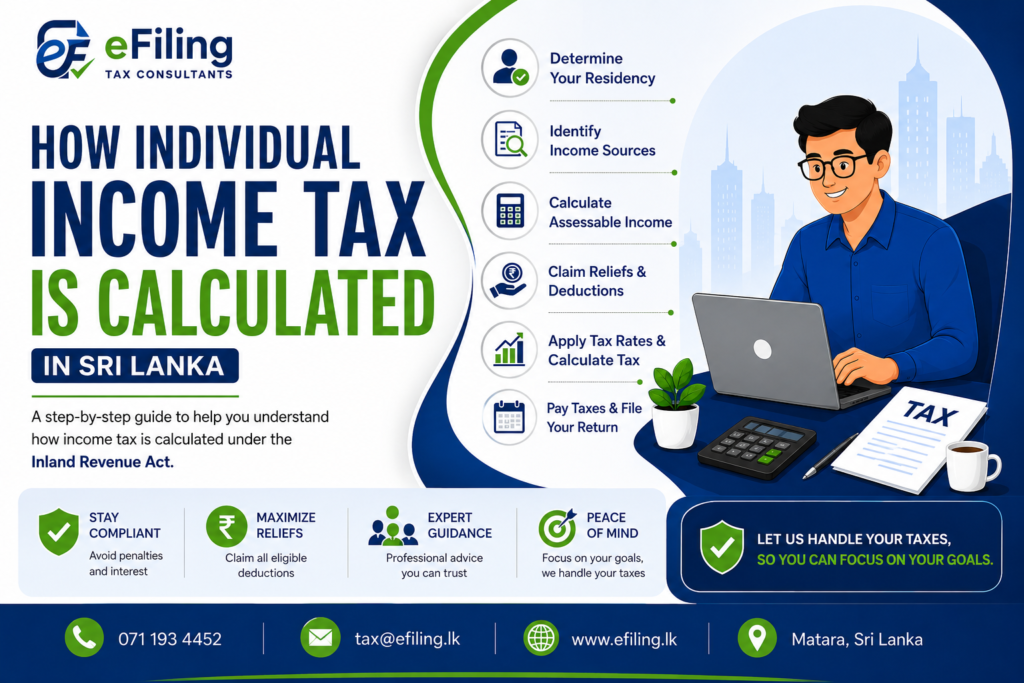
The first step in determining your tax liability is to establish whether you are a tax resident or a non-resident in Sri Lanka.
If You Are a Tax Resident
A resident individual is generally subject to Sri Lankan Income Tax on their worldwide income. This means that employment income earned outside Sri Lanka may be taxable unless a specific exemption applies under the Inland Revenue Act or relief is available under a Double Taxation Agreement (DTA).
Examples of foreign income that may be taxable for a resident include:
- Salary or wages earned from employment overseas
- Foreign employment or service income
- Foreign investment income
- Other foreign-source income
If You Are a Non-Resident
A non-resident individual is generally taxed only on income derived from Sri Lanka.
Therefore, employment income earned from services performed outside Sri Lanka is generally not taxable in Sri Lanka, provided it is not considered Sri Lanka–sourced income under the Act.
Is Working Overseas Automatically Tax-Free?
No.
A common misconception is that anyone working outside Sri Lanka is automatically exempt from Sri Lankan Income Tax. This is not correct.
The tax treatment depends on several factors, including:
- Whether you are a resident or non-resident for tax purposes.
- Where the employment services are performed.
- Whether the income is considered Sri Lanka–sourced under the Inland Revenue Act.
- Whether any statutory exemption applies.
- Whether relief is available under an applicable Double Taxation Agreement.
Each case should be assessed based on its own facts.
How Does the Inland Revenue Act Apply?
The Inland Revenue Act generally taxes:
- Income derived from Sri Lanka; and
- Worldwide income of individuals who are tax residents of Sri Lanka.
Accordingly, determining your residency status is often the starting point when assessing whether foreign employment income is taxable.
Practical Examples
Example 1 – Resident Individual
A Sri Lankan citizen remains a tax resident because they satisfy the residency test under the Inland Revenue Act. They work for a foreign employer and receive their salary from overseas.
Depending on the applicable provisions of the Act and any available exemptions or treaty relief, their foreign employment income may be taxable in Sri Lanka.
Example 2 – Non-Resident Individual
A Sri Lankan citizen works overseas and does not satisfy the tax residency test in Sri Lanka during the relevant Year of Assessment.
As a non-resident, they are generally taxed only on Sri Lanka–sourced income. Employment income earned abroad is generally not taxable in Sri Lanka.
Why Professional Advice Is Important
Foreign income taxation can be complex. Factors such as tax residency, the source of income, statutory exemptions, and Double Taxation Agreements can all affect your tax obligations.
Obtaining professional advice before filing your Income Tax Return can help you:
- Determine your tax residency status.
- Correctly identify taxable and exempt income.
- Claim any available tax relief.
- Avoid penalties and ensure compliance with Sri Lankan tax laws.
Need Assistance?
If you earn foreign employment income and are unsure about your Sri Lankan tax obligations, our experienced tax professionals can help.
We can assist with:
- Tax residency assessments
- Foreign income tax advice
- Income Tax Return preparation
- Double Taxation Agreement (DTA) guidance
- Inland Revenue Department (IRD) compliance
Contact eFiling Tax Consultants today for reliable, practical, and professional tax advice tailored to your circumstances.
Disclaimer: This article provides general information only and should not be regarded as legal or tax advice. Tax outcomes depend on the facts of each case and the applicable provisions of the Inland Revenue Act, No. 24 of 2017 (as amended), related regulations, and any applicable Double Taxation Agreement.